


Whey Too Much: What’s behind India’s protein price crisis?
Whey Too Much: What’s behind India’s protein price crisis?
For millions of Indians who’ve made whey protein a part of their daily routine, the past two years have been a glaring reminder of an uncomfortable development: what was once a manageable monthly expense has now become a hefty purchase.
The raw materials needed to manufacture whey protein powder tell the story most clearly. Whey protein concentrate – the base ingredient used by most Indian supplement brands –has surged in price from around ₹700–800 per kg until 2024 to over ₹2,000–2,300 per kg today. For context, a standard 1 kg tub of whey powder retails anywhere between ₹3,000 and ₹6,000 depending on the brand.
Isolate prices have nearly tripled. Input costs across the board have risen by 200–250% in just 24 months.
So, what’s going on?
The import paradox
Here’s the most surprising part: India has been the world’s largest milk producer since 1998. And yet, it imports 80-85% of its supplement-grade whey protein. Records have shown an estimated 23,000 tonnes in 2025 alone, roughly 20% more than the previous year.
After digging deeper, there seems to be a structural reason behind this discrepancy. India’s dairy industry was built around liquid milk, curd, paneer, and ghee. Supplement-grade whey, however, is a byproduct of large-scale cheese manufacturing – a category India has historically under-invested in. The result is a country swimming in milk but dependent on the US, Europe, New Zealand, and Australia for the whey protein its consumers increasingly demand.
On top of this domestic gap, global forces have compounded the problem: supply chain disruptions, rising freight costs, a weakening rupee, and surging worldwide demand for protein supplements have all pushed prices higher simultaneously.
Who’s paying the price?
Whey protein is no longer a niche product that you see on competitive athletes’ shelves. It has become a staple in gyms, grocery aisles, and even in hospital nutrition programmes. The urban middle class (working professionals, gym-goers, health-conscious parents) built whey into their routines when prices were manageable. They’re now absorbing price hikes they didn’t budget for.
There’s a secondary risk here too. As prices climb, some consumers are trading down to cheaper, lower-quality products – many of which have been found to contain less protein than their labels claim, along with undisclosed additives. Saving money on a mislabeled product isn’t really saving money at all.
What are your alternatives?
The good news is that there are many alternatives.
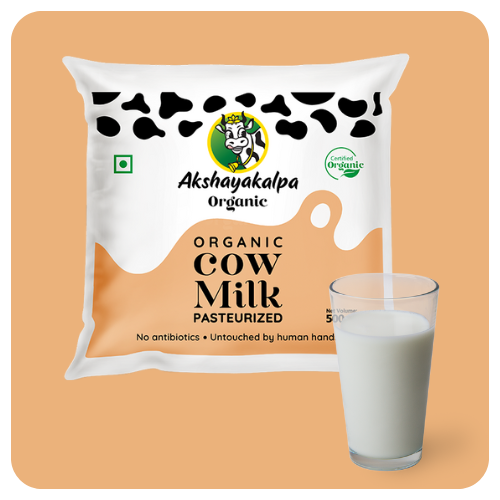
A glass of whole milk gives you around 8g of protein per serving along with calcium, B vitamins, and natural electrolytes.
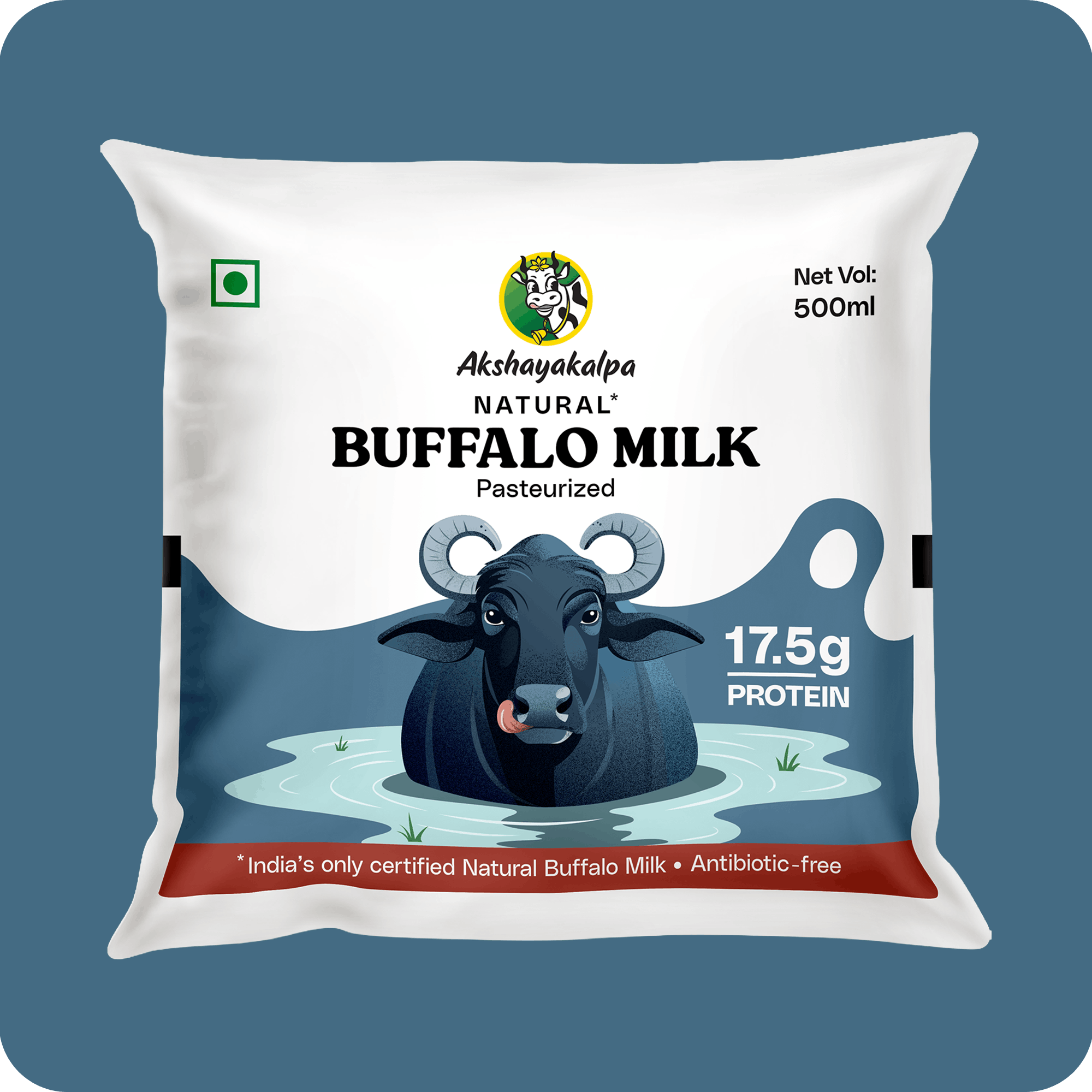
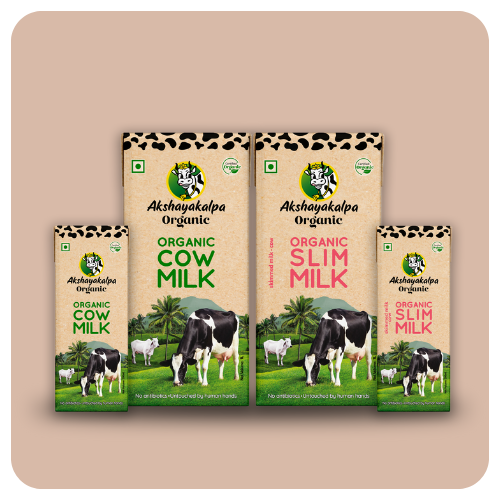
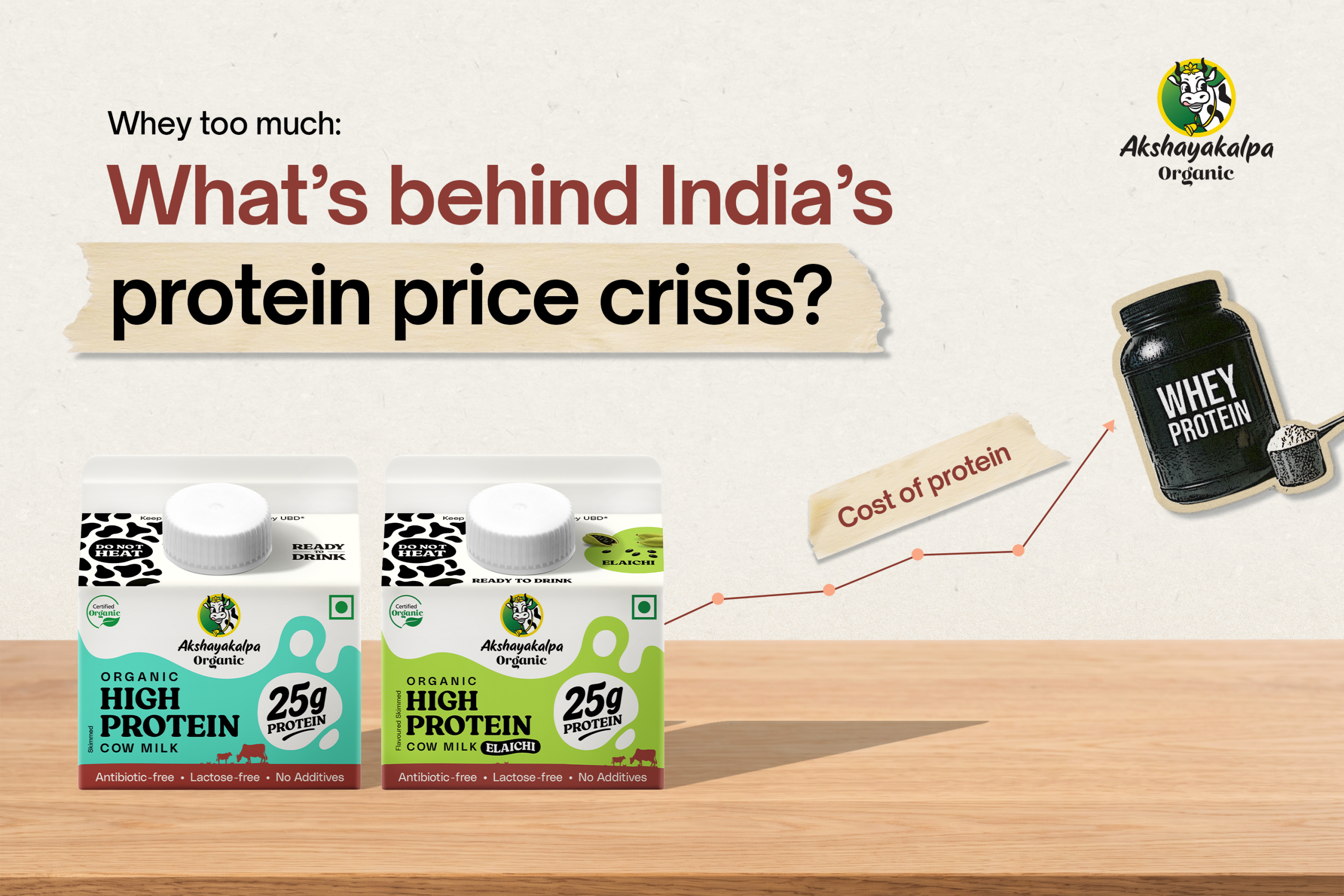
Akshayakalpa’s Organic High Protein Milk packs 25g of bioavailable protein into a single 250ml serving, is lactose-free, low in fat, and contains no additives, making it easy on the gut. It’s worth noting that the protein here is naturally occurring and not a concentrate added after the fact.
A well-constructed Indian diet, such as dal, rajma, paneer, curd, and eggs, also delivers complete protein across the day at a fraction of supplement costs. The amino acid gaps in any one source are naturally filled by the others.
Rethink your diet
The whey price crisis shows that no single supplement is indispensable. Rotating protein sources, eating closer to India’s existing food culture, and approaching supplement marketing with more skepticism are all reasonable responses to this.
And if you’re looking for an option that sits between whole food and supplement, it might be worth looking closer to home than you think. Support local farms and the Indian dairy industry by choosing Akshayakalpa High Protein Milk.