




A hidden metal scene in Bengaluru’s vegetables?
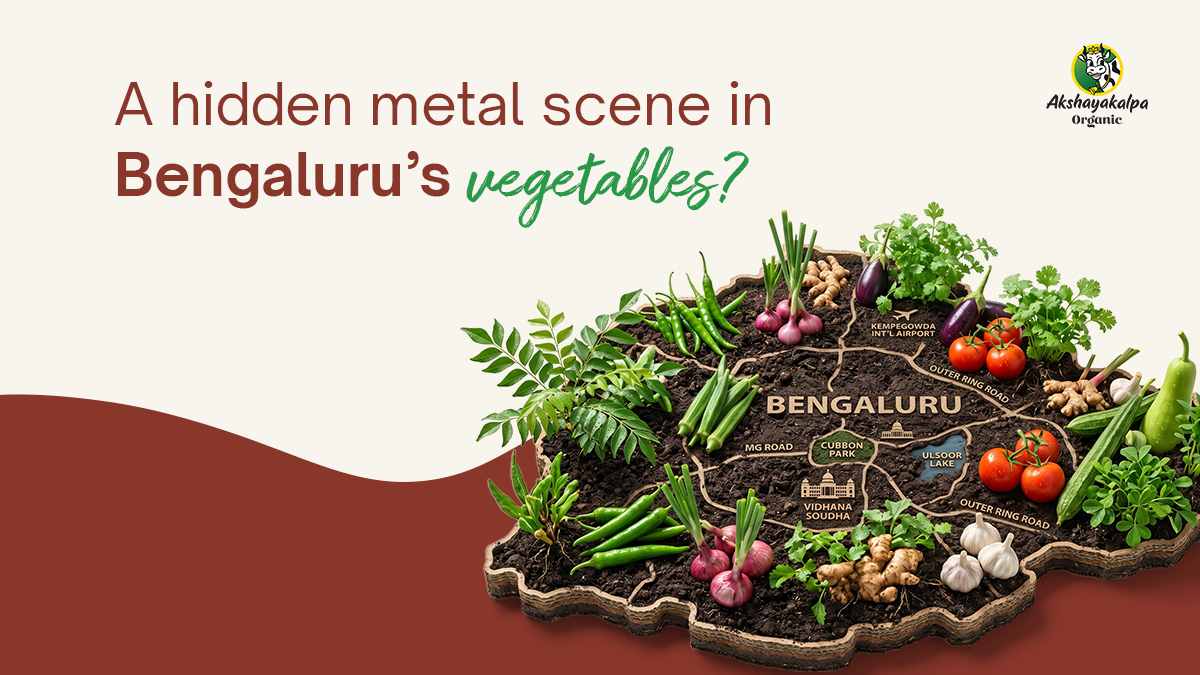
The inherent “healthiness” of vegetables doesn’t really make you think about the quality of the ingredients you’re buying. Which is why the Central Pollution Control Board’s (CPCB) report on the alarmingly high level of lead in daily produce should make you think twice before putting those tomatoes in your basket.
A report submitted to the National Green Tribunal by the CPCB found that a significant portion (nearly 26%) of vegetable samples collected in and around Bengaluru contained lead contamination above permissible limits. Unlike packaged food, vegetables don’t come with warning labels and end up being rarely questioned by consumers. All you can rely on is the colour and shape of the vegetable, and buying food should never be a gamble.
A five-member CPCB committee collected 72 vegetable samples in February and September 2025 from agricultural fields in Nelamangala, Kolar, and Chikkaballapur, as well as from major retail chains such as APMC markets and HOPCOMS. Out of the samples, 19 were found to have dangerous amounts of lead in them.
Here’s the worst offenders:
-
Brinjal showed the most alarming result, with one sample containing 1.953 mg/kg of lead – nearly 20 times the permissible limit of 0.1 mg/kg.
-
Little gourds (tondekai) exceeded limits by about 18 times
-
Flat beans (chaprada avere) contained 1.825 mg/kg (nine times the limit of 0.2 mg/kg)
-
Leafy greens and cabbage showed five times the prescribed limit of 0.3 mg/kg
Even some vegetables labeled as “organic” were found to have levels that far exceed the permitted amount.
Apart from lead, the study identified residues of 12 pesticides exceeding FSSR standards, and contamination occurred in 23 out of 26 soil samples collected from farming areas.
But how did these vegetables even get contaminated in the first place? Pesticides aren’t the sole culprit here. Let’s zoom out for a moment and see what resources are involved in crop cultivation.
Contaminated irrigation water – including wastewater or water from polluted lakes – is a key pathway for toxic metals like lead, cadmium and nickel entering vegetables. The use of wastewater to cultivate vegetables in Bengaluru has resulted in a concerning surge in heavy metal accumulation within crops. Leafy vegetables are particularly susceptible to heavy metal accumulation due to their higher transpiration rates.
Heavy metals such as lead can also accumulate in soil over time due to industrial emissions, vehicle exhaust, waste dumping and the use of certain fertilisers. Once present in soil or water, these metals can be absorbed by plant roots and transported into edible parts of the crop.
Bengaluru sources its vegetables from farmer networks in peripheral regions including Bengaluru Urban, Kolar, Chikkaballapur, Ramanagara, and Bengaluru Rural, with HOPCOMS alone delivering 70 tonnes of vegetables. Here, many farmers have no alternative to wastewater as it’s simply what flows past their farms.
CPCB’s findings may sound worrying, but awareness is the first step towards change. Knowing what’s in your food is the best form of protection for you and your family. Here’s how to be a more informed consumer:
Learn to spot contamination – Heavy metal contamination is largely invisible to the naked eye, but that doesn’t mean you can’t see the signs. Unusual discolouration, especially dark spots or odd hues, can be a sign of contamination. Vegetables that feel slimy or unnaturally mushy may be suspicious, and a strange or pungent odour is a reason to avoid them.
Clean your vegetables properly – For leafy greens, separate each leaf and rinse individually under running water for at least 30 seconds. If eating them raw, a five-minute baking soda soak (one teaspoon per cup of water) followed by a running water rinse adds an extra layer of reduction. The US National Pesticide Information Center recommends keeping produce under running water rather than soaking it.
For vegetables where it’s practical, peeling helps significantly. Cooking also reduces pesticide residue by 18–100% depending on the vegetable and method.
Buying from responsible sources that test for heavy metals can limit your exposure. Knowing where your produce comes from remains the single most effective protection. Wash well, cook where you can, peel when practical, and rotate your vegetables. And keep asking questions about where your food comes from.