





Is creatine protein? What it really is and how it works
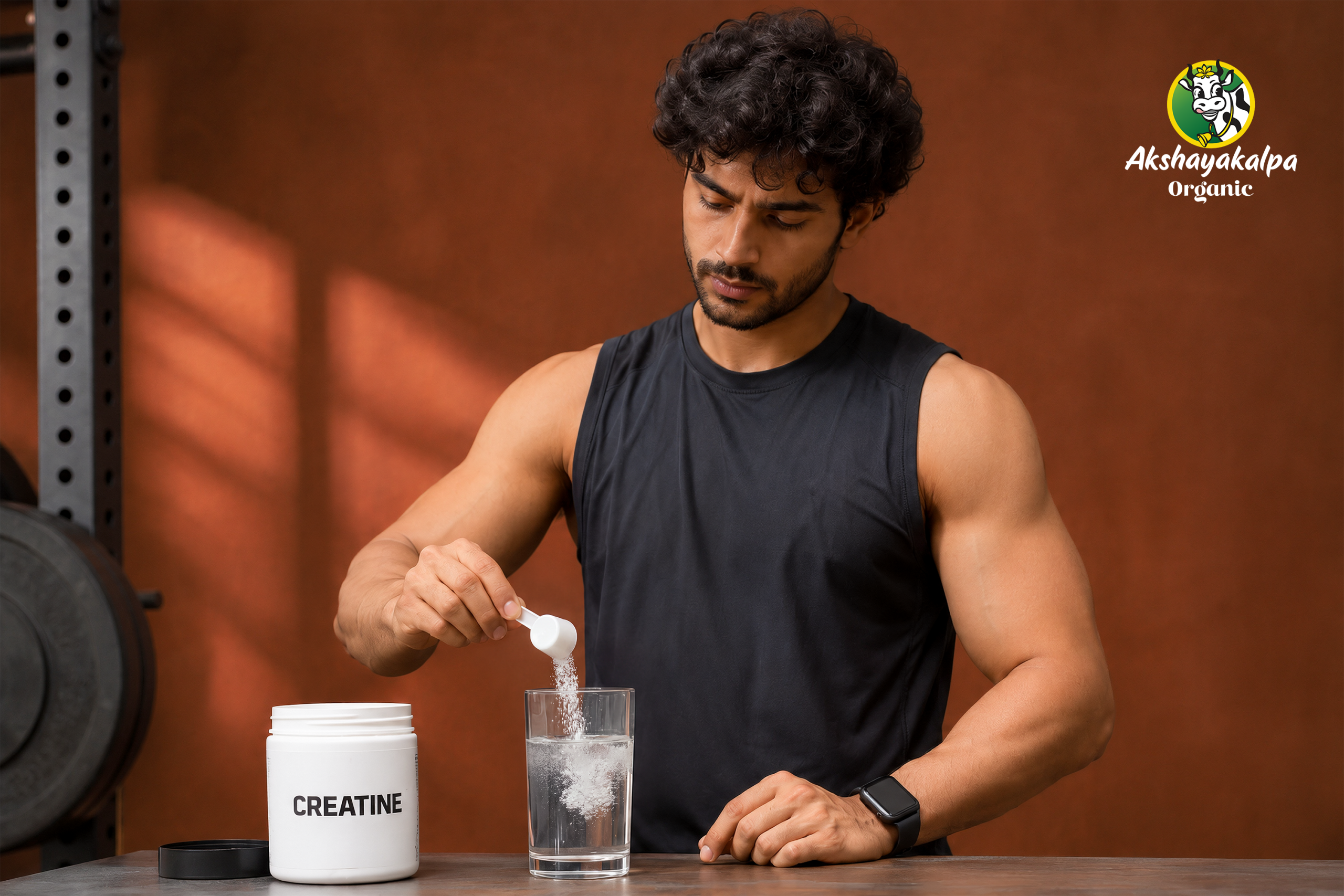
Your friend constantly talks about creatine before every workout. In fact, you always see them stir a teaspoon of it into water.
Let’s solve this creatine mystery once and for all.
What is creatine?
Creatine is a naturally occurring substance found in muscle cells. Your body makes it in the liver, kidneys and pancreas, using three amino acids: glycine, arginine and methionine. Almost all of it, about 95%, is stored in your muscles.
One thing to clear up: creatine is not protein. Protein is made of long chains of amino acids. Creatine is a small compound your body builds from just three of them. So, the creatine in your friend’s glass doesn’t count towards their daily protein.
Does your body make enough?
Your body makes some creatine every day, and the rest comes from food. You need a fresh supply because every day your body breaks down about 1–2% of its creatine into a waste product called creatinine, which leaves through the kidneys.
What about a vegetarian diet?
Creatine is found mainly in red meat and seafood. Meat and fish contain about 1–2 g of creatine per 450g. Plants contain none, and dairy and eggs have very little.
So, think about a typical vegetarian plate: dal, rice, roti, sabzi, curd, paneer. It’s full of goodness, but it lacks creatine. Vegetarians rely almost entirely on what their own body makes, and research shows they usually have less creatine in their muscles.
Can the body simply make more to make up the gap? Not fully.
Low creatine intake from food can’t be completely made up by the body’s own production. Even on a regular diet with meat, muscle creatine stores are usually only 60–80% full.
What a vegetarian diet can do is give your body the raw materials. The three amino acids your body uses to make creatine come from the protein you eat. That’s one more reason to keep dal, paneer, curd and milk on your plate.
How does creatine work?
Think of creatine as a quick-charge battery for your muscles.
Your muscles run on a fuel called adenosine triphosphate (ATP). When you lift something heavy, sprint or climb stairs fast, your muscles burn through their ATP within seconds. Creatine, stored in your muscles as phosphocreatine, recharges that fuel almost instantly, so your muscles can keep going at full effort a little longer.
That’s why creatine helps with short, intense bursts: one more lift, one more sprint. It doesn’t do much for long, slow activities like walking.
What happens when you take it?
Supplements can raise your muscles’ creatine stores by 20–40%. With fuller stores, people who do strength training can push a little harder, and over time that leads to more strength and muscle.
Notice the key words: with strength training. Creatine helps your muscles work harder, and the work is what builds them.
So, should you be stirring Creatine into water too?
Creatine is one of the most studied supplements out there, and it works best for people who do strength training. But it’s not a shortcut. Your muscles still need movement to grow, and enough protein from your everyday food to build with. Creatine is a supplement, so if you’re thinking of trying it, talk to your doctor first.